How We Beat 50+ Teams and Won the Hackathon with an AI Resume Parser
24 hours. Three sleep-deprived developers. One LLM-powered idea. We didn't just submit something — we shipped something judges had never seen before at an inter-college hackathon.
Hour 0: The Problem Statement Drop
The problem statement came down at 9 PM: "Build an intelligent tool to assist in recruitment workflows." Every team there had the same thought: applicant tracking system. Job board. Filtering tool. We saw 50 teams pivot to the same idea within 10 minutes.
We took 20 minutes to talk before writing a single line of code. The question we asked ourselves was: what's the one thing in recruitment that still can't be automated well?
Answer: understanding what's actually in a resume beyond keywords.
The Core Idea
We built an LLM-powered resume parser that didn't just extract fields — it reasoned about the candidate. It could:
- Extract structured data (name, experience, skills) from any resume format — PDF, DOC, plain text
- Generate a semantic skills profile that goes beyond keyword matching
- Compare the candidate's actual experience against a job description and produce a fit score with explanations
- Highlight gaps and strengths in natural language, not just percentages
The Panic at Hour 14
At 11 AM the next day, everything was working — except the PDF parsing was breaking on resumes with unusual formatting. 3 hours before the demo, 40% of our test resumes were failing.
We made a call: instead of fixing the parser perfectly, we added a fallback pipeline that converted every PDF to plain text via PyMuPDF before feeding it to the LLM. It wasn't elegant. But it worked for 100% of our test cases.
"Working is better than perfect. Ship it."
The Demo and the Win
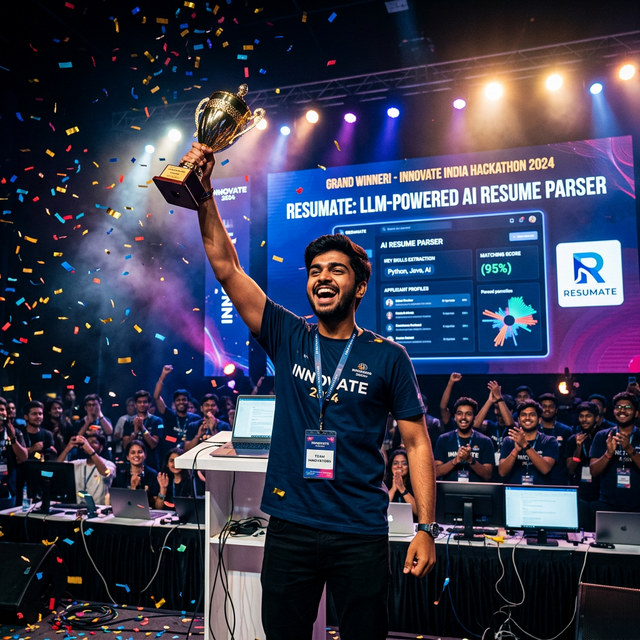
We live-demoed with a real job description from Google and a sample resume. The tool analyzed it in 8 seconds and produced a ranked skills comparison with natural language feedback. The judges had been sitting through CV form scrapers all morning — this was the first system that could explain why someone was or wasn't a fit.
We won. First place. It wasn't because we had the most polished UI or the most complex architecture. It was because we solved the right problem in a way no other team did.
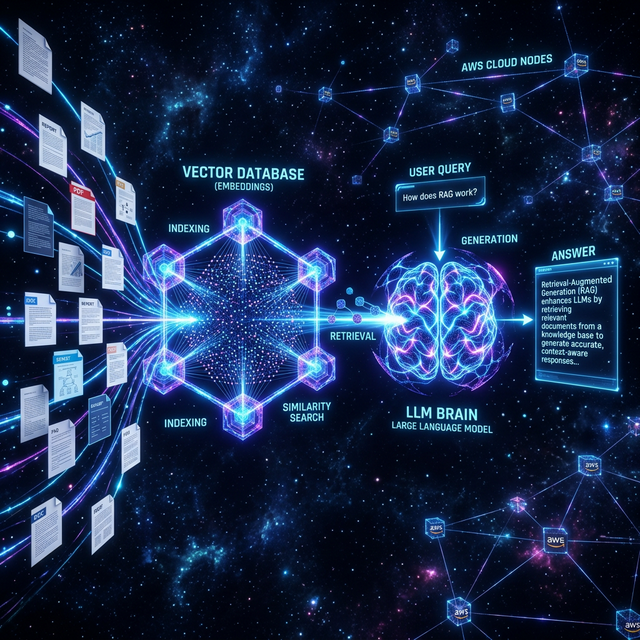
The full technical deep-dive on the RAG and LLM pipeline we used is in my projects section.
See the Project